

Laser Rangefinder Guides & Technical Articles
Technical guides covering laser rangefinder module selection, ranging performance, optical integration, interfaces, environmental factors, and OEM applications.

How to Integrate a Laser Rangefinder Module into an EO System
Learn how to integrate a laser rangefinder module into an EO system, from mechanical mounting and optical alignment to power supply, TTL or RS-422 communication, window selection, and final system checks.
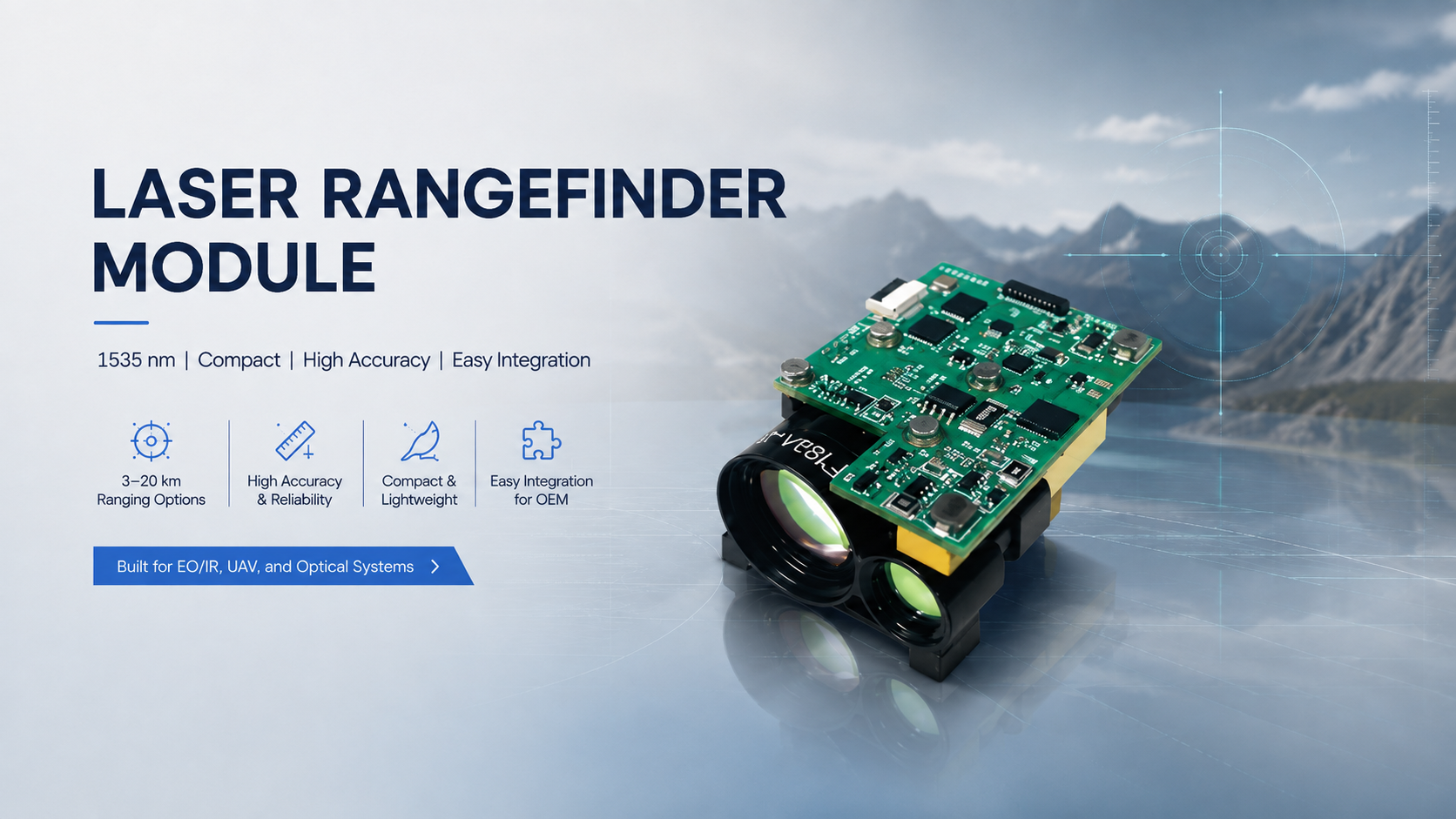
Why 1535 nm Is Used in Laser Rangefinder Modules
Learn why 1535 nm is widely used in laser rangefinder modules, from eye-exposure characteristics and Er laser sources to InGaAs receivers, beam divergence, atmospheric transmission, and OEM integration. This guide also explains what engineers should consider when selecting a 1535 nm laser ranging module for real applications.
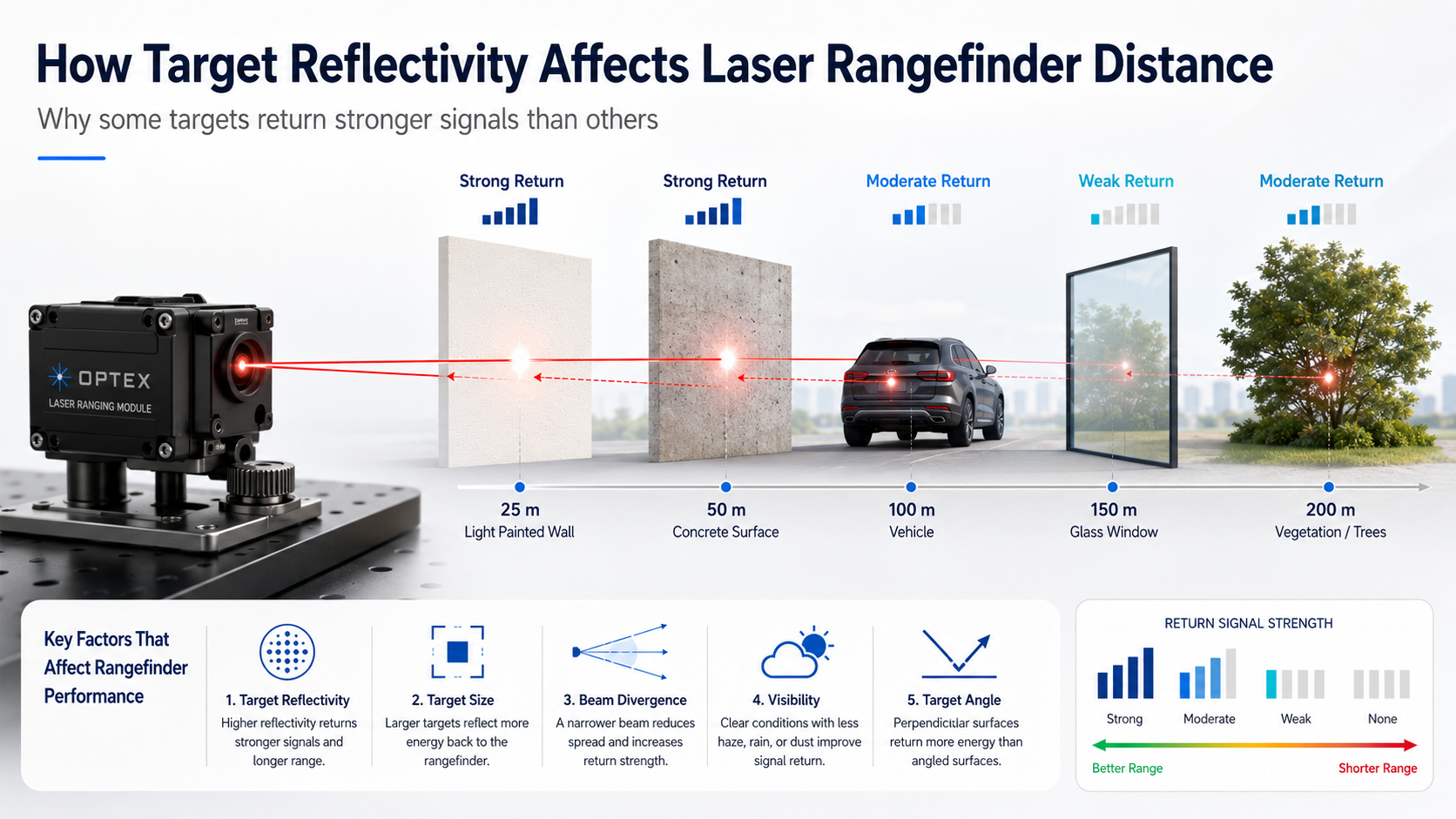
How Target Reflectivity Affects Laser Rangefinder Distance
Target reflectivity can have a major impact on laser rangefinder distance. This article explains how surface type, target size, beam divergence, visibility, target angle, and atmospheric conditions affect return signal strength and real-world ranging performance.
How to Choose a Laser Rangefinder Module from 3 km to 20 km
Choosing the right laser rangefinder module involves more than checking maximum distance. This guide explains how to select 3–20 km modules based on target size, reflectivity, visibility, beam divergence, optical windows, interfaces, power, and mechanical requirements for OEM integration.
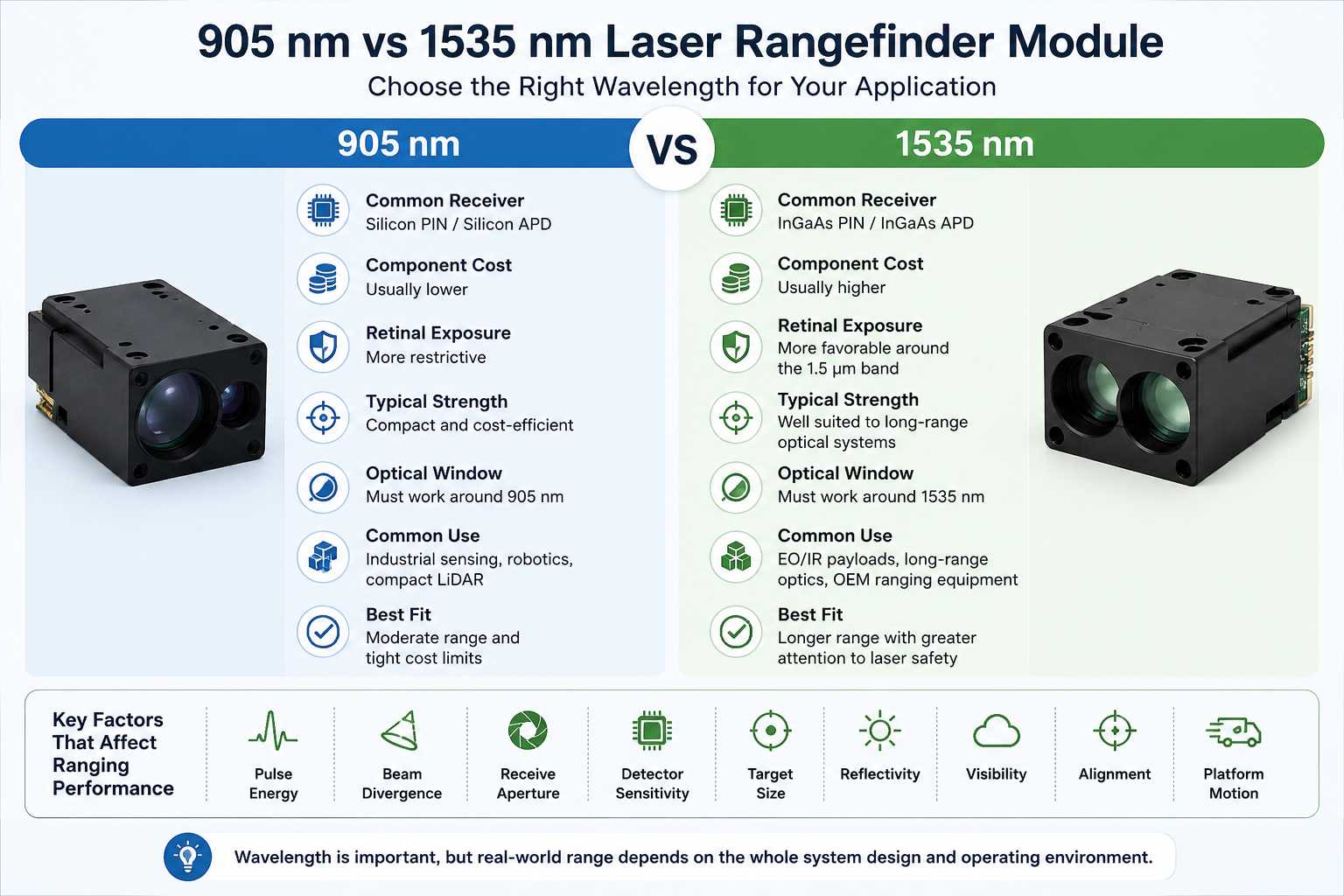
905 nm vs 1535 nm Laser Rangefinder Module: Which One Fits Your System?
This article compares 905 nm and 1535 nm laser rangefinder modules from the perspective of detector choice, cost, laser safety, ranging performance, optical integration, and OEM applications. It also explains when a 1535 nm laser rangefinder module is a better fit for long-range systems and what to check before selecting a module.